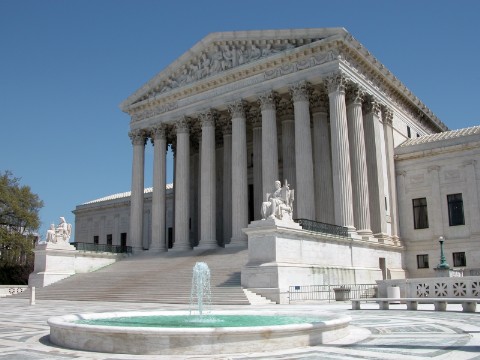
 ABC News has a report that the Brady Campaign is bracing itself for a loss in DC v Heller - the DC handgun ban challenge that the Supreme Court will decide on by the end of this month. Furthermore, Brady President Paul Helmke has conceded that his people have "lost the battle on what the second amendment means":
Seventy-five percent of the public thinks it's an individual right. Why are we arguing a theory anymore? We are concerned about what we can do practically.While this concession should be viewed as a tremendous defeat for the Brady group, Helmke, with the help of ABC, insinuates that they could somehow turn it into a political victory. The idea is that once the 2nd amendment is indisputably declared an individual right, it will take the teeth out of the NRA and make it hard to motivate their base. The LA Times joins in this commentary by spinning the potential gun rights victory with the headline "NRA's political clout is waning". They go on to say:
Congress hasn't passed major legislation to restrict gun use in 14 years. Democrats -- scarred by past NRA campaigns -- almost never talk about the issue anymore.Helmke and the Times seem to think that just because the NRA has won a victory on the federal level it means they will somehow fold up shop and allow states to slowly regulate firearms out of existence. In my last post I linked to an interview with DC v Heller lead lawyer Alan Gura, who warned of this "death by 1000 cuts" approach. What opponents seems to ignore is that while every four years the NRA has mobilized to ensure gun rights are upheld on the federal level, the majority of their work is done at the local level. The National Rifle Association is by its nature a grassroots organization. Most states have a local affiliate (in my home state of Washington we have the Washington State Rifle and Pistol Association and the Washington Arms Collectors) and national members receive via e-mail a weekly state roundup and local action alerts to let the rank-and-file know what the organization is doing to preserve gun rights in their area.
And Americans now show little interest in gun control. Just half want tougher rules for gun sales, compared with nearly two-thirds in 2000.
It may be true that the NRA might not be able to warn their members about federal registration and confiscation any longer if DC v Heller goes in their favor. That being said, they will have plenty to worry about, and infringements on the state level will be more than enough motivation. As groups like the Brady Campaign phase themselves out of Capitol Hill and into the state houses, the NRA will follow. The "1000 cuts" of microstamping, emergency confiscation, ammunition serialization, smart gun mandates, gun show background checks, affordable gun bans, expensive safety over-regulation, gun buybacks, cosmetic gun bans, and caliber-specific ammunition bans have constantly come from state, not federal legislators.
The NRA started as a way to ensure that Americans citizens would always be proficient with firearms if called during wartime. As anti-gun advocates gained power, the association morphed into one of the largest grassroots operations in Washington, and arguably one of most powerful lobbying groups. If the fight for gun rights moves solely to the state capitols, I have no doubt that they will be quick to move into that role. This is a role they have been largely successful in for decades - all while winning the war on the federal level.


No comments:
Post a Comment